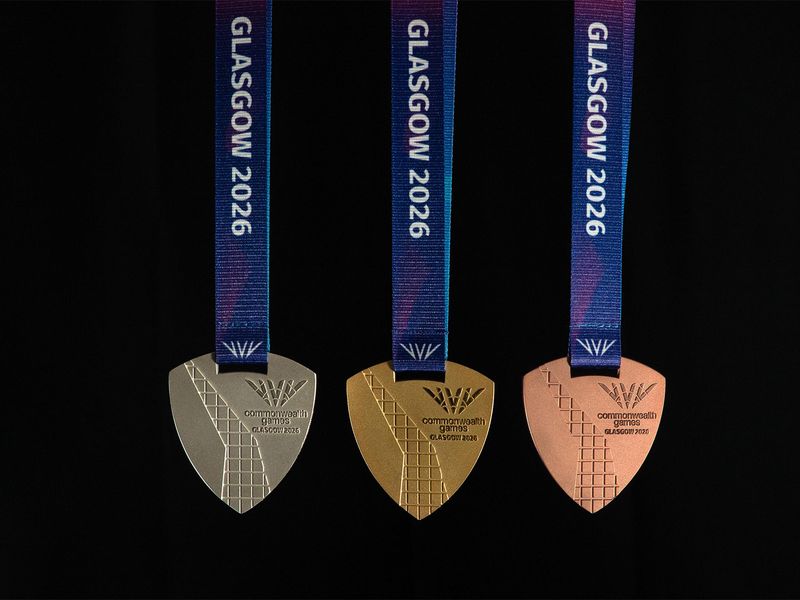
The countdown to the Glasgow Commonwealth Games begins amid debates over the quadrennial event’s relevance in the contemporary times and its financial burden, which led to Australia’s Victoria backing out and Glasgow agreeing to host a scaled-down version.
Despite this edition featuring only 10 sports, the CWG is the third-largest multi-sporting event after the Olympics and Asian Games with over 70 participating nations.
The history of the CWG tells us that politics and sports are closely intertwined. The event was started with the intent of having a sporting platform that reflected the British Empire’s identity at a time when the Olympic movement was increasingly dominated by countries such as the USA.
The inaugural edition was held as the British Empire Games in Hamilton, Canada, in 1930. As the decolonisation era began and a new world order emerged with the end of World War II, the Games went through several name changes before settling on the Commonwealth Games in 1978.
The centenary edition will be held in Ahmedabad in 2030. India made its debut in the Games in 1934 and finished in 12th position with a bronze medal in wrestling won by Rashid Anwar (men’s 74kg freestyle). In 1958, India won two gold medals and a silver as Milkha Singh made the tri-colour fly high at Cardiff in Wales. In the same edition, the Indian contingent included women for the first time.
India have missed only the 1950, 1962 and 1986 editions. India did not participate in 1950 due to financial constraints. It did not send its contingent in 1962 due to the war with China. In 1986, India joined 32 Commonwealth countries and territories, mainly from Africa, Asia and the Caribbean, in boycotting the Games. It was a protest against the British government’s policy towards apartheid in South Africa.
In the previous edition held in Birmingham in 2022, India won 61 medals. India’s best ever performance came in 2010 when it hosted the event in Delhi and finished second in the medal tally. The most decorated Commonwealth Games athlete was Jaspal Rana, who passed away recently. A legendary shooter, he had 15 medals to his name, including nine gold.
India has emerged as one of the most successful nations in the CWG history. Wrestling, weightlifting, boxing, badminton, table tennis and shooting have consistently contributed to the country’s medal tally. Many of India’s finest sporting icons used the platform to showcase themselves internationally before achieving Olympics success.
Shooters such as Abhinav Bindra and Gagan Narang, boxer Mary Kom, wrestler Sushil Kumar, badminton stars Saina Nehwal and PV Sindhu, weightlifter Mirabai Chanu and javelin thrower Neeraj Chopra all enhanced their international reputation at the Commonwealth Games.
However, this edition will witness a different sporting landscape, as several events and India’s opportunities of winning medals inevitably stand diminished. With the intention of making the event more financially viable, the hosts have dropped major sporting disciplines like cricket, hockey, squash, wrestling, table tennis and badminton. In fact, the absence of shooting at the last edition had affected India’s overall tally.
Despite its rich history, the event faces several structural challenges. Hosting the event has become increasingly expensive, requiring massive investments in sports infrastructure, transport, accommodation and security. Several cities have either withdrawn their bids or expressed reluctance to host because of financial concerns. For instance, Australia pulled out after being chosen as host as projected costs escalated to nearly $5 billion. While scaling down the Games seems to be the way forward, it has attracted backlash from several countries, including India, for reducing their chances of winning medals.
