Army Chief Gen Upendra Dwivedi on Saturday said future conflicts would no longer be confined to conventional battlefields and would be fought across multiple domains, including land, air, sea, space, cyber, electromagnetic and cognitive spheres.
Addressing cadets after reviewing the passing-out parade of the 150th Course at the National Defence Academy (NDA) in Pune, Gen Dwivedi said Operation Sindoor had demonstrated India’s resolve and the armed forces’ ability to deliver a calibrated, precise and purposeful response.
“The operation underlined the importance of integrated planning, real-time intelligence, precision targeting, robust air defence, secure communications and synergy across domains,” he said.
The event held special significance for Gen Dwivedi, an alumnus of the NDA’s 65th Course, as he returned to his alma mater as the reviewing officer. As a cadet, he trained with Charlie Squadron before embarking on a military career that eventually led him to become Chief of the Army Staff.
Earlier, the Army Chief reviewed the passing-out parade at the Khetarpal Parade Ground, marking the commissioning of 355 cadets into the armed forces. The graduating cadets marched past in a display of military precision and discipline before joining the Army, Navy and the Air Force.
Referring to Operation Sindoor, Gen Dwivedi said the Army was fully conscious of the changing nature of warfare and was transforming itself into a future-ready force under the ‘Decade of Transformation’ initiative.
“The raising of Divyastra Batteries, Shaktimaan Regiments, Bharat Battalions and other technology-enabled structures from within our existing resources is part of this transformation,” he said.
Highlighting the growing role of drones in modern warfare, the Army Chief said drone training was now being imparted at all military academies. The Army training team at the NDA had been equipped with four to six large drones and simulators to familiarise cadets with emerging technologies.
On the use of artificial intelligence, Gen Dwivedi referred to the OODA cycle — Observe, Orient, Decide and Act — and said AI would help accelerate decision-making in a high-velocity battlefield environment.
“Today’s battlefield is witnessing the deployment of large numbers of drones. Forces need counter-drone capabilities while simultaneously employing their own drones. Managing these resources requires a significant degree of automation, and artificial intelligence plays a pivotal role in that process,” he said.
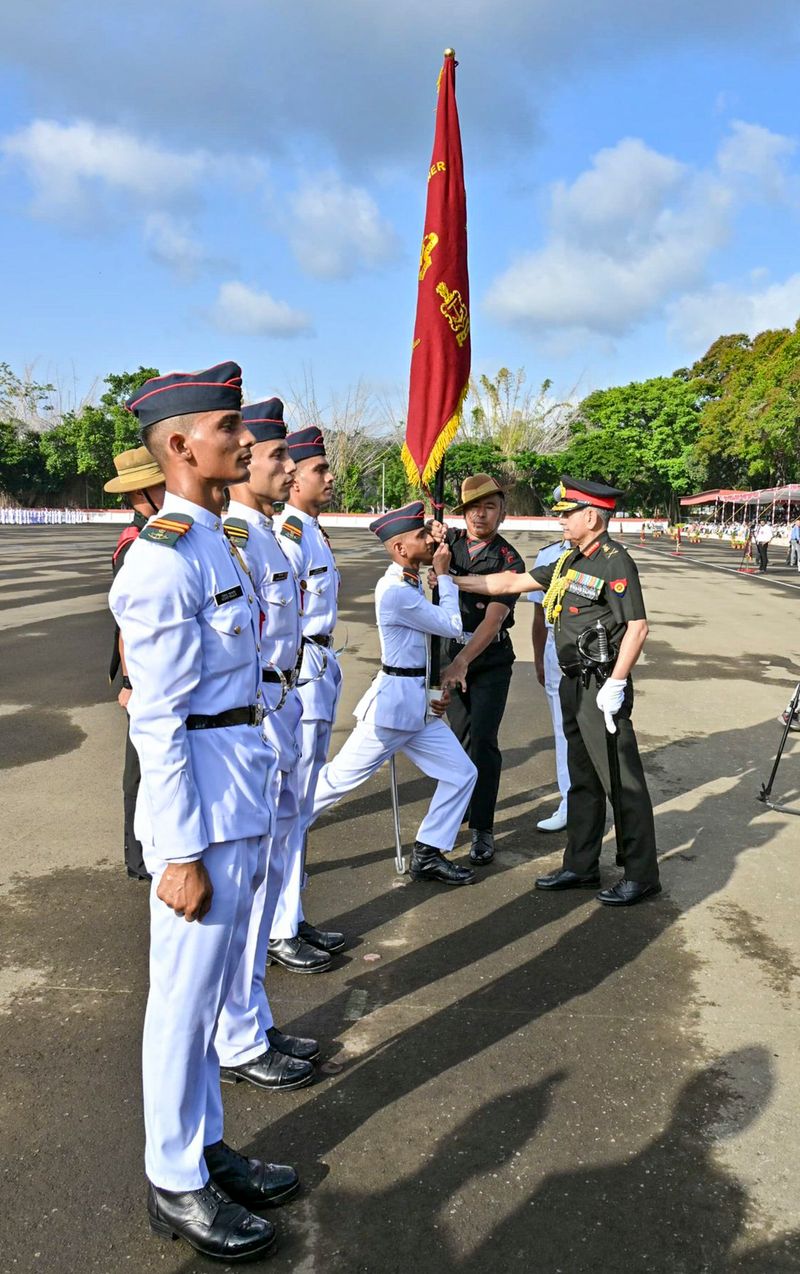
AI, drones key to future warfare, says Army Chief
