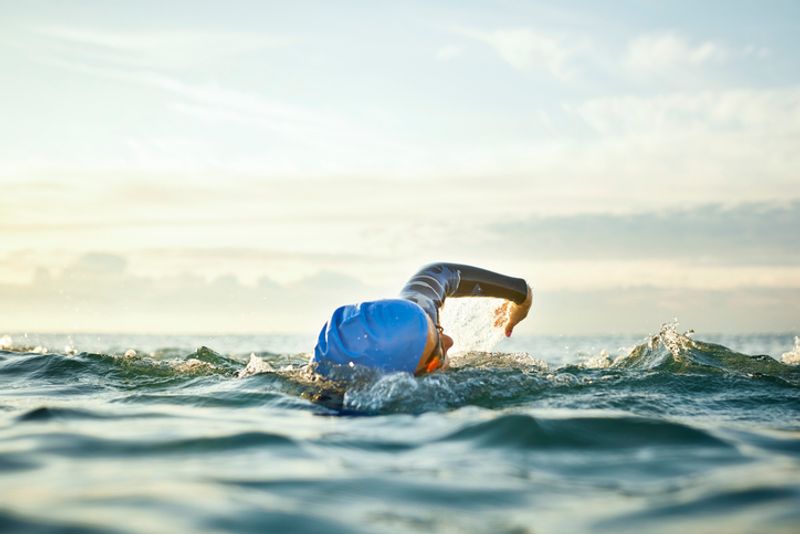
Para swimmer Tejas Nandakumar, who was named in the Indian contingent for the upcoming Glasgow Commonwealth Games, will not compete at the multi-sport event starting on July 23 after his entry was rejected by the organisers due to a classification issue.
The 20-year-old Nandakumar’s name featured in the list of competitors issued by the government last week. He was due to compete in the men’s 50m freestyle S7 event in Glasgow, and his entry had earlier been accepted by the organisers.
The S7 classification in para swimming is for athletes who have full use of their arms and trunk but limited leg function, are missing parts of both legs, or have limited movement in all four limbs. Nandakumar, who previously competed at the 2023 Para Asian Games, has a congenital condition affecting his legs.
In a letter sent on July 9, the local organisers informed the Indian Olympic Association (IOA) that he was no longer eligible to compete following a validation process conducted by the international federation — World Para Athletics — after June 23.
“Following the IF validation process (post June 23), the athlete (Tejas Nandakumar) has been identified as ineligible to represent your CGA in the Para Swimming competition of G2026 (Glasgow 2026),” Georgia Lambert, Sports Entries and Information Coordinator – Oceania & Asia, Glasgow 2026, wrote in the letter.
“The athlete must be internationally classified with a confirmed sport class status or review with a fixed review date of 2027 or later at the sport entries deadline of June 23, 2026. As the class status for Tejas is R-2025, he is therefore unfortunately ineligible to compete.”
Classification determines which athletes are eligible to compete in a sport and how they are grouped for competition. The process is designed to safeguard the integrity of fair competition.
Athletes are classified by panels of medical and technical experts in their sport. Evaluations normally take place before competitions, during which athletes are assigned their classification.
Classification is not permanent. Athletes with progressive conditions require periodic reviews.
Depending on the type and severity of an impairment, an athlete may undergo evaluation several times during their career. Some impairments change over time, while junior athletes may not have reached skeletal maturity at the time of their first classification.
In such cases, classifiers may decide that an athlete must undergo a further evaluation at the next competition or at specified intervals.
Classification issue rules Nandakumar out of Glasgow Games
